

- This event has passed.
Forms of Energy and Cosmopolitics of Labor
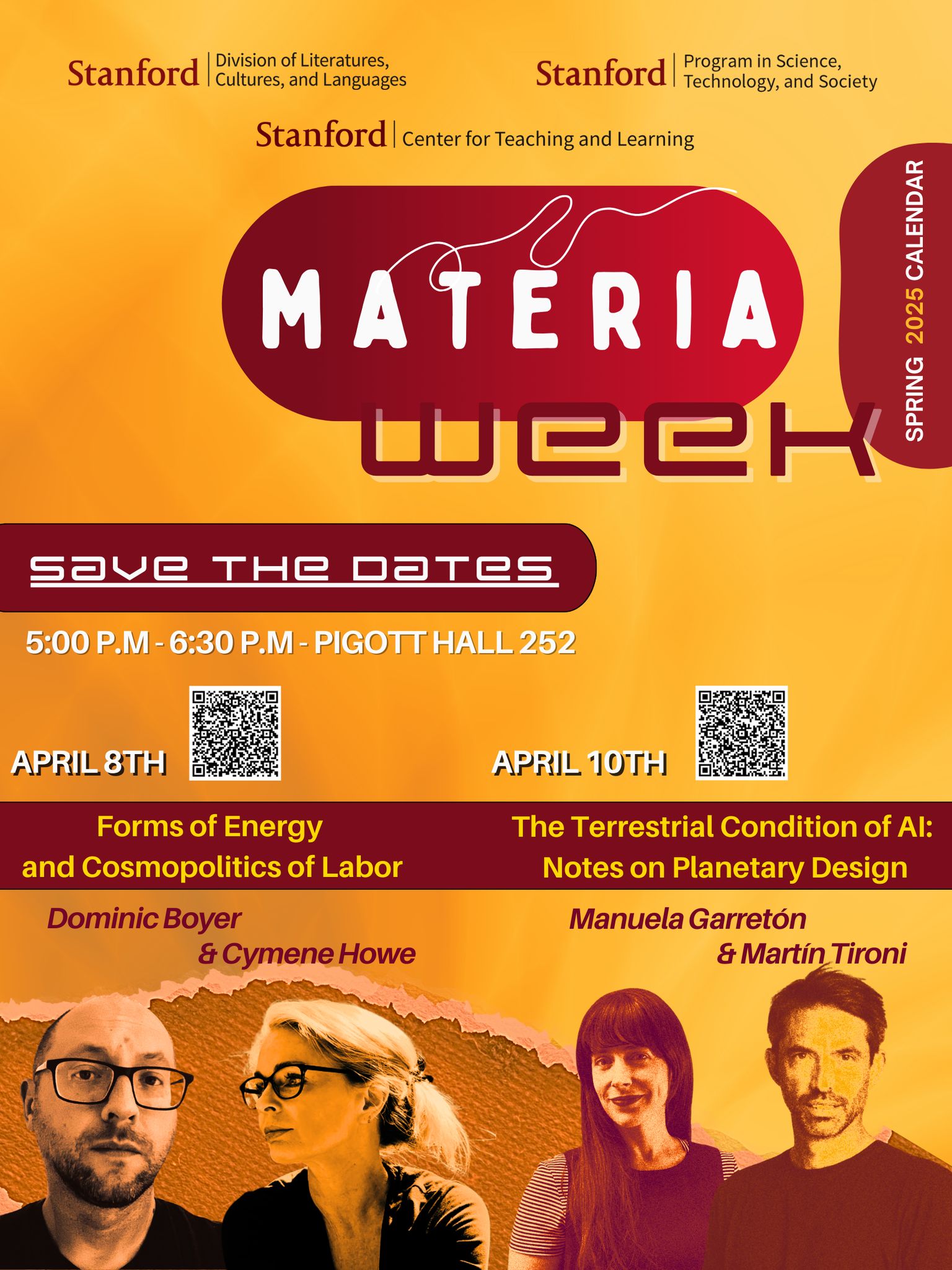
Join us for a materia panel on our yearly theme energies of energy!
This talk discusses the evolution of the high energy growth paradigm of northern modernity through the overlapping energy regimes of new world plantations (sucropolitics), machinic industrialism (carbopolitics) and plastic mobilization (petropolitics). This genealogy of modern energy helps us to better understand the fossilized logics of fossil fuels that seek to amber us in an ecocidal, genocidal trajectory. In conclusion, I discuss some strategies for confronting a gerontocratic sucro/carbo/petrostate with what I term “decompositional politics” (Boyer 2023).
Dominic Boyer is an anthropologist, media maker and environmental researcher whose work has helped shape the interdisciplinary field of Energy Humanities. Recent books include Energopolitics (Duke UP, 2019), which analyzes the politics of wind power development in Southern Mexico and Hyposubjects (Open Humanities Press, 2021), an improvisational philosophical collaboration with Timothy Morton concerning politics in the Anthropocene. With Cymene Howe, he made a documentary film about Iceland’s first major glacier (Okjökull) lost to climate change, Not Ok: a little movie about a small glacier at the end of the world (2018). In August 2019, together with Icelandic collaborators they installed a memorial to Okjökull’s passing, an event which caused The Economist to create their first-ever obituary for a non-human. His most recent book is titled No More Fossils (U Minnesota Press, 2023) a discussion of fossil fuel fossils and what is to be done about them.
What can the wind tell us about the world? In many conventional wisdoms it portends change. But it is also, from many cosmological points of view, a foundational property in elemental systems of being. In more contemporary configurations of energetic extraction, wind serves as a kinetic laborer. In this presentation, wind is offered as a speculative form and elemental figure with multiple potentials. Across the lands of Oaxaca, México—which serves as a case study here—wind takes up ontological capacities that range from the economic to the philosophical.
